
Location: Conference Hall E
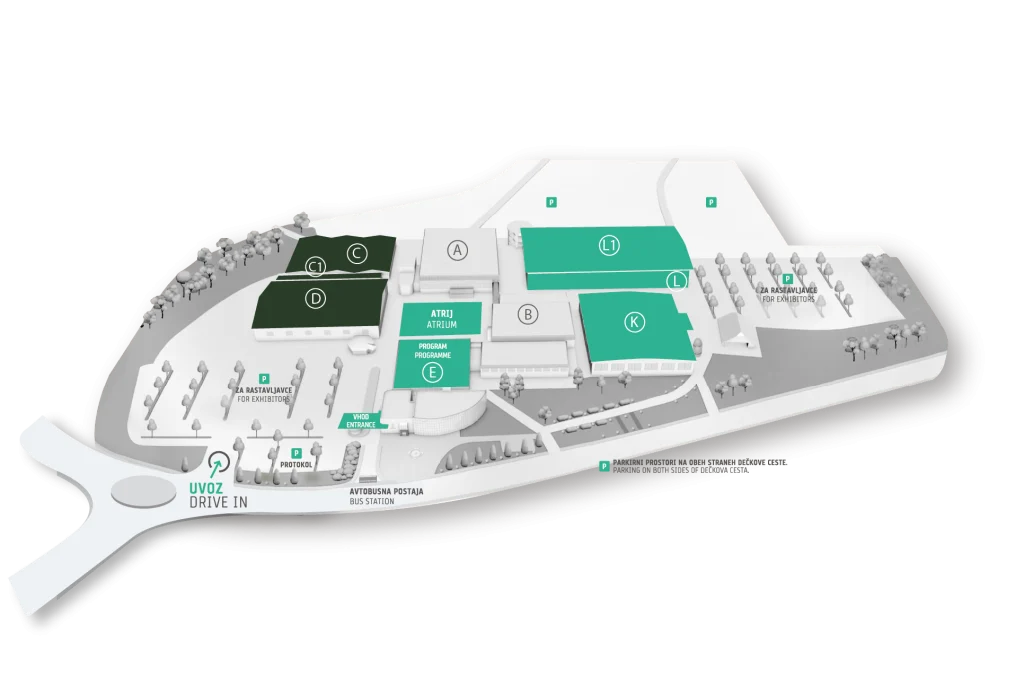
Tuesday, 10 November 2026
- 08:30Visitors' Registration
- 09:00Event Opening and Security Check
- 10:00 – 10:45Official Opening of SIDEC 2026 Conference and Exhibition
- 12:30 – 15:30Lunch, networking and individual visit to the trade fair
- 13:30 – 15:30
Keynote Panel: Defence Industry Adaptation Based on Operational and Battlefield Experience in Modern Conflicts: Lessons Learned from Ukraine
- 15:30 – 17:00End of the conference and individual visit to the trade fair
- 17:00End of Day 1
*The programme of the Official opening and Keynote Panel will be simultaneously interpreted.
Wednesday, 11 November 2026
- 08:30Visitors' Registration
- 09:00Event Opening and Security Check
Panel: UASs and Training – Practical Experience from Ukraine
Panel: Future Soldier – Detection, Sensing and Digital Twins
- Lunch, networking and individual visit to the trade fair
- 13:00MoU Signing ceremony (FORUM)
Panel: Redefining Energy Resilience as a Key Defence Capability
- End of the conference and individual visit to the trade fair
- End of Day 2
Thursday, 12 November 2026
- Visitors' Registration
- Event Opening and Security Check
Panel: Space and Defence - Dual-Use Applications and Federated Capability Development under the ESA Framework: Multiplying Capabilities and Enhancing Resilience
- Lunch, networking and individual visit to the trade fair
- Solemn Closing of the Official part of SIDEC 2026
End of the conference and individual visit to the trade fair
Trade fair open to the general public- Official Closing of SIDEC 2026
In the meantime, there will be time for networking and independent visit to the fair.
*The entire conference programme will be conducted in English without interpretation
*The entire conference programme will be conducted in English without interpretation
Don’t miss: Exhibitors’ presentations at the Open Forum in L1!
OPEN FORUMTuesday, 10 November 2026 / 10.00–10.45
SOLEMN OPENING OF SIDEC 2026
The following speakers will address the attendees:
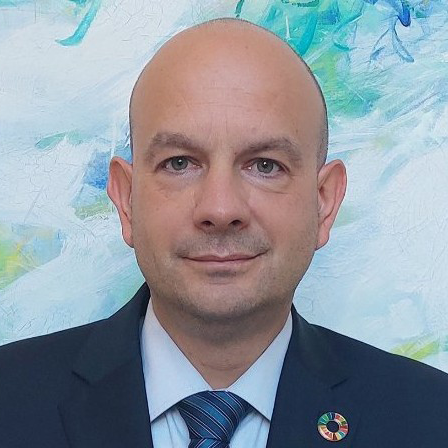
Boštjan Skalar
Director of GOIS, Slovenian Defence Industry Cluster
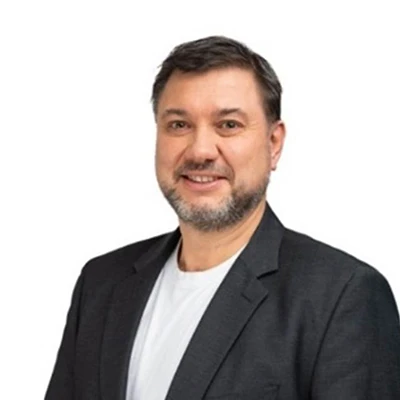
Uroš Korošec
Acting Director-General of the Logistics Directorate, Ministry of Defence of the Republic of Slovenia
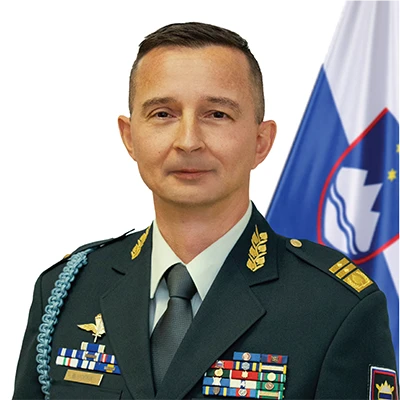
Major General Boštjan Močnik
Chief of the General Staff of the Slovenian Armed Forces
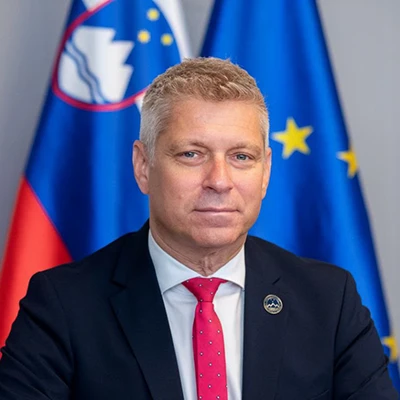
Msc. Valentin Hajdinjak
Minister of Defence, Ministry of Defence of the Republic of Slovenia
CONFERENCE PROGRAMME
Tuesday, 10 November 2026 / 13.30–15.30
Defence Industry Adaptation Based on Operational and Battlefield Experience in Modern Conflicts: Lessons Learned from Ukraine
The panel brings together senior representatives from politics, the military and the defence industry to examine how the war in Ukraine is changing approaches to operations, industrial production and allied cooperation. The focus will be on concrete experience from Ukraine and on how NATO and the EU are translating these lessons into faster adaptation of defence capabilities.
Keynote Speakers

Industrial Transformation of the Defence Sector
High Level Government Representative
High Level Government Representative
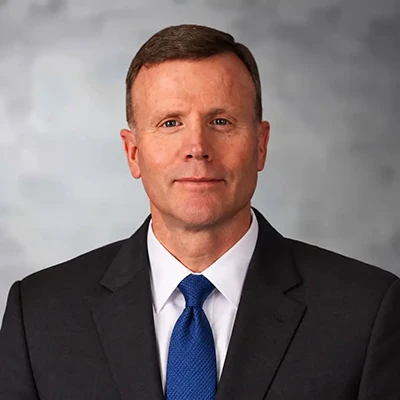
Allied Military Leadership and NATO Adaptation to Modern Conflicts
Tod Wolters
ex SACEUR
General Tod D. Wolters (USAF, Ret.) is a Senior Advisor at Jones Group International. He completed a distinguished 40-year military career in 2022, serving as Supreme Allied Commander Europe (SACEUR) and Commander of US European Command (EUCOM). Throughout his career, he held numerous senior leadership positions in the US Air Force and NATO, playing a key role in strengthening transatlantic security and defence cooperation.
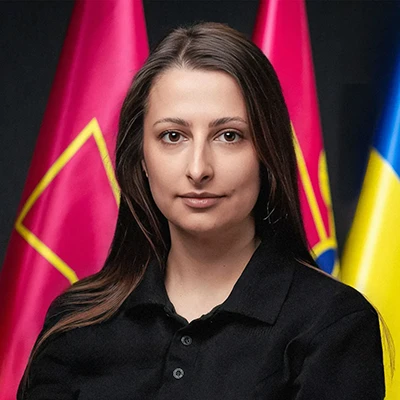
Video Address by Deputy Minister of Defense Anna Gvozdiar
Anna Gvozdiar
Deputy Minister of Defence of Ukraine
Anna Gvozdiar was appointed Deputy Minister of Defence of Ukraine on 7 September 2026 pursuant to Order of the Cabinet of Ministers of Ukraine No. 890-r of 7 September 2026. Prior to her appointment, she served as Adviser to the Minister of Defence of Ukraine.
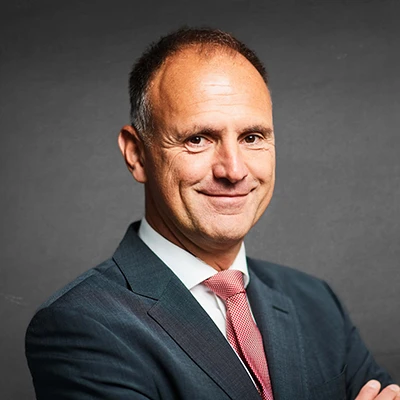
European Cooperation in the Development of Defence Capabilities
André Denk
Executive Director, European Defence Agency - EDA
Panel Speakers
Moderator
Zoe White
NATO
Learning at the Speed of Conflict: NATO Adaptation in Modern Warfare
Zoe White
Head of Policy, Plans & Partnerships NATO

Battlefield Innovation as Allied Advantage: Turning
Ukraine's Lessons into Collective Capability
Maurisa S. Coleman
Defence & Geopolitical Strategist, Trypillian
Maurisa S. Coleman is a defence and geopolitical strategist with experience in Ukraine’s defence technology sector, working with unmanned systems and battlefield technologies shaped by frontline operational experience.
Her work focuses on defence innovation, industrial capability, international partnerships and the translation of battlefield lessons into deployable military technologies. She supports strategic development and engagement with government, industry and international defence partners.
Previously, Maurisa served as a Senior Adviser in the UK House of Commons, specialising in foreign affairs and national security, and held a management position at an international strategy consultancy.
She is a Visiting Fellow at the Durham Institute of Research, Development & Invention and is currently undertaking postgraduate studies in the Department of War Studies at King’s College London, specialising in International Security and Intelligence.
Maurisa regularly contributes to discussions on European security, NATO, deterrence and the future of defence innovation, with a particular interest in strengthening the relationship between military requirements, technological development and industrial capacity.
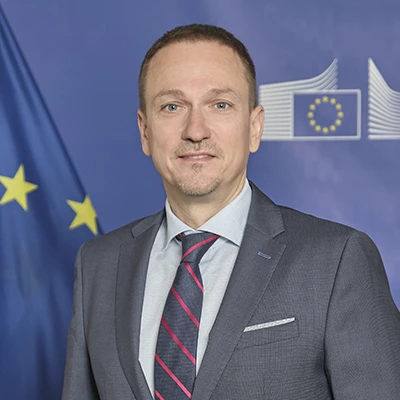
Supporting Innovative Defence Start-ups through the BraveTech EU Initiative
Michal Piwowar
initiative leader BraveTech EU, DEFIS
Michał Piwowar is a Policy Coordinator in the Ukraine Support and Military Mobility Unit at the European Commission’s Directorate-General for Defence Industry and Space (DG DEFIS). He has extensive experience in defence policy, military mobility, and international security, having held various positions at the Polish Ministry of National Defence and the Permanent Representation of Poland to NATO. He holds a master’s degree in Political Science from the University of Warsaw.
PANEL: Wednesday, 11 November 2026 / 9:45 – 10:45
PANEL: UASs and Training – Practical Experience from Ukraine
The panel examines experience with the use of unmanned systems (UAS) on the battlefield in Ukraine and the challenges of training operators for their effective use. Speakers will present military, industrial and academic experience in the development, training and practical deployment of drones.
9:45
START
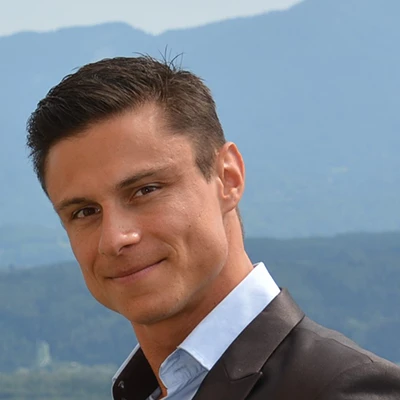
Moderator
dr. Joao Caetano
European Defence Agency - EDA
Dr. João Caetano joined the Portuguese Air Force Academy at 18. He served at the Portuguese Air Force for 20 years. He holds a Ph.D. in Aerospace Engineering from Delft University of Technology. His career focused on research and operations of Unmanned Aircraft Systems at the Portuguese Air Force Research Center, where he was also an assistant professor. He was head of UAS operations for the Portuguese Air Force, and UAS Remote Pilot instructor. As a NATO appointee, he oversaw UAS research and chaired the Strategic Committee of the Applied Vehicle Technologies Panel at NATO’s Science and Technology Organization. Currently, he is honored and humbled to serve the EU Members States at the European Defence Agency as a Project Officer on UAS Programmes, supporting defence research, technology development, and the integration of UAS in airspace. He supports EDA’s roles, while supporting the development of defence capabilities and military cooperation among the Member States in the UAS domain.
EDA programmes in the field of unmanned systems
dr. Joao Caetano
Project Officer UAS Programmes, European Defence Agency - EDA
Dr. João Caetano joined the Portuguese Air Force Academy at 18. He served at the Portuguese Air Force for 20 years. He holds a Ph.D. in Aerospace Engineering from Delft University of Technology. His career focused on research and operations of Unmanned Aircraft Systems at the Portuguese Air Force Research Center, where he was also an assistant professor. He was head of UAS operations for the Portuguese Air Force, and UAS Remote Pilot instructor. As a NATO appointee, he oversaw UAS research and chaired the Strategic Committee of the Applied Vehicle Technologies Panel at NATO’s Science and Technology Organization. Currently, he is honored and humbled to serve the EU Members States at the European Defence Agency as a Project Officer on UAS Programmes, supporting defence research, technology development, and the integration of UAS in airspace. He supports EDA’s roles, while supporting the development of defence capabilities and military cooperation among the Member States in the UAS domain.
Practical experience in operating drones on the battlefield
captain Vitalii Serhiichuk
Unmanned Systems Command, Ukrainian Armed Forces
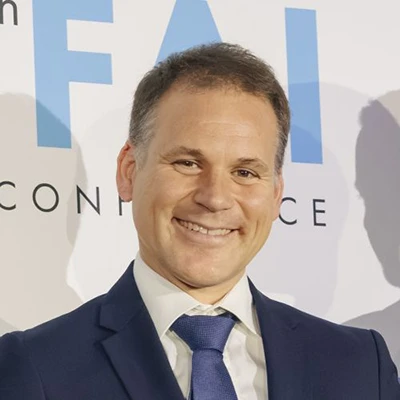
Training for the use of drones and transfer of practices to the Slovenian Armed Forces
Senior Lecturer dr. Igor Petrović
University of Ljubljana, Faculty of Mechanical Engineering
Senior Lecturer Dr. Igor Petrović heads the Laboratory for Aeronautics (AEROL) at the Faculty of Mechanical Engineering, University of Ljubljana, where he works in the fields of aviation education and research. Within the EASA-approved Flight School of the Faculty of Mechanical Engineering (SI.ATO.029), he serves as an instructor and is responsible for theoretical training, compliance, and aviation safety.
His professional and research work focuses on aviation, with a particular emphasis on unmanned aerial systems (UAS), their integration into shared airspace, and their application in agriculture and viticulture. As part of a strategic initiative to regulate state-operated unmanned aerial systems, he investigated, among other things, the requirements for training UAS pilots, with the goal of establishing a regulatory framework in Slovenia. Under his leadership, two training courses titled “Basic Operation of Unmanned Aerial Vehicles” were conducted as part of a micro-credentialing system. He is actively involved in the development of aviation technologies and the practical training of future aviation professionals.
A significant part of his pedagogical and mentoring work involves the development of young aeronautical engineers and participation in student projects. Notably, he serves as a mentor to the “Edvard Rusjan Team,” which has achieved impressive results in the international “Design, Build, Fly” competition—a challenge in which students design and construct a new, purpose-built, remotely piloted aircraft each year.

T-BPL-VR Project: Experiences and Presentation at the HEDI Event in Portugal
Dr. Boštjan Bremec
technical director, C-Astral
Dr. Boštjan Bremec earned his degree and, in 2003, his doctorate from the Faculty of Mechanical Engineering at the University of Ljubljana. As a young researcher in the Laboratory for Nonlinear Mechanics (LANEM), he focused on elasto-plastic mechanics, plate stability, geometric optimization, and finite element method (FEM) simulations; he also contributed to the construction of the faculty’s first laminar wind tunnel. As a teaching assistant, he led practical sessions on numerical methods and engineering mechanics. In 2003, he joined Iskra Avtoelektrika, where, as a design and development engineer, he worked on starters for internal combustion engines and participated in the implementation of a PLM system and the transition to 3D modeling. From 2011 to 2018, he headed the Research and Development department at MAHLE Letrika, where he led the development team, helped shape product strategy, and oversaw the professional development of his colleagues. He is a co-author of one Slovenian and two European patents; in 2016, he received a national silver award from the Chamber of Commerce and Industry of Slovenia for his innovation—an electromagnetic switch with controlled engagement force. Since 2018, he has served as the Head of the Technical Division at C-Astral, where he is responsible for the applied development, production, and servicing of unmanned aerial vehicles (UAVs), while also managing externally funded development projects. He was a member of the team that received the 2024 Red Dot “Best of the Best” design award for the SQA unmanned aerial vehicle.
Next-Generation Military Vehicles: Control and Training Strategies
dr. David Alfano
AIRBUS - Head of Future Programmes in the Airbus Helicopters Strategy department
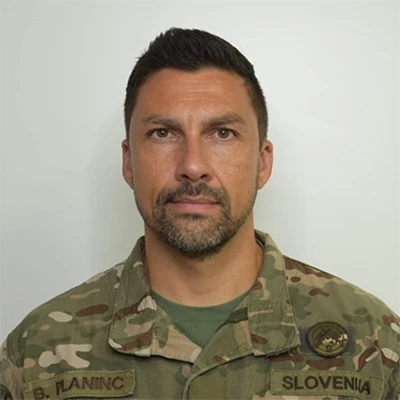
UAS Training: Slovenian Armed Forces Experience
major Blaž Planinc
The General Staff of the Slovenian Armed Forces.
The General Staff of the Slovenian Armed Forces, is a Slovenian representative in the EDA Working group UAS Operational Users.
10:45
END
PANEL: Wednesday, 11 November 2026 / 11:00 – 12:00
PANEL: Future Soldier – Detection, Sensing and Digital Twins
The panel focuses on detection technologies, monitoring of physiological condition and digital twins of soldiers, which will improve their protection and effectiveness in the future.
11:00
START
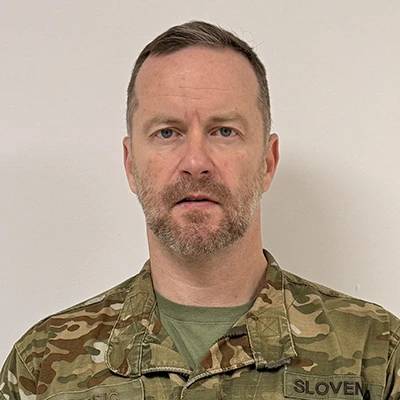
Moderator
Colonel Aleš Kesič
Slovenian Armed Forces
Colonel Aleš KESIČ currently serves at the Command for Doctrine, Development, Education and Training, a newly established command within the Slovenian Armed Forces tasked with generating forces ready for immediate combat. His primary focus is multidomain operations.
He previously served at the General Staff and Forces Command, where he focused on operational shooting policy to support safe and effective live firing as a fundamental component of overall combat readiness.
At the tactical level, he served as an operational detachment commander in the Special Forces and as an infantry company commander.
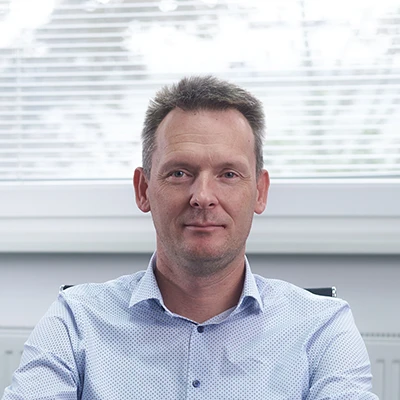
Wearable AI-powered sensory system and protection for soldiers
Boštjan Marolt
CEO, FireCat Group d.o.o.
Boštjan Marolt is an engineer of economics with over 25 years of experience in management, sales, and international business.
Since 2011, he has led FireCat Group, a company that develops and manufactures advanced solutions for the defense and security industry—specifically in the fields of multispectral camouflage, ballistic protection, military clothing systems, and electronic and sensor technologies.
His work focuses on strategic development, innovation, and international cooperation. He actively supports the integration of the Slovenian defense industry, the strengthening of domestic expertise, and the inclusion of Slovenian companies in international development projects.
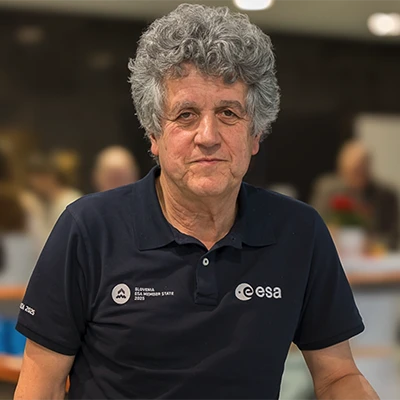
Development of Protective Suits for Future Soldiers (Camouflage, Heat Dissipation)
prof. dr. Igor B. Mekjavič
Department of Automatics, Biocybernetics and Robotics, Institut Jožef Stefan
Professor Igor B. Mekjavic is a Scientific Counsellor, and Leader of the Research Programme Group “Automation, Robotics and Biocybernatics” (supported by the Slovene Research and Innovation Agency) in the Department of Automatics, Biocybernetics and Robotics at the Jozef Stefan Institute. He is head of the Environmental Physiology and Ergonomics Laboratory at the Jozef Stefan Institute (Slovenia). The main focus of his basic research projects has been the effect of thermal and non-thermal factors on human temperature regulation. He founded the European Space Agency ground-base laboratory in Planica, which focusses on the physiology and medicine of humans in space and in extreme environments. He conducts laboratory and field investigations of personal protective clothing systems for the Slovene Armed Forces and various industrial partners.
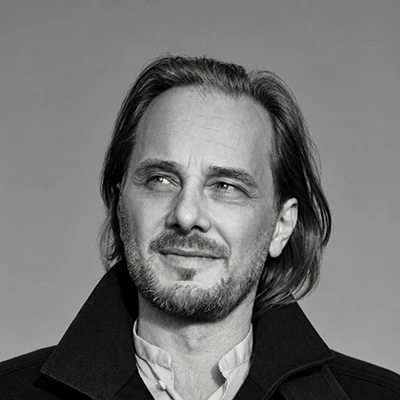
Human Physiology, Medical Measurements and Digital Twins
prof. dr. Borut Kirn
University of Ljubljana, Faculty of Medicine, Institute of Physiology
Borut Kirn, PhD, is a Professor at the Institute of Physiology, Faculty of Medicine, University of Ljubljana, and a consultant in cardiovascular physiology and biomedical engineering. His expertise spans cardiovascular modelling, inverse haemodynamics, physiological signal analysis and digital twins. His work links physiological measurements with computational models to estimate cardiovascular state and assess responses to physiological stress.
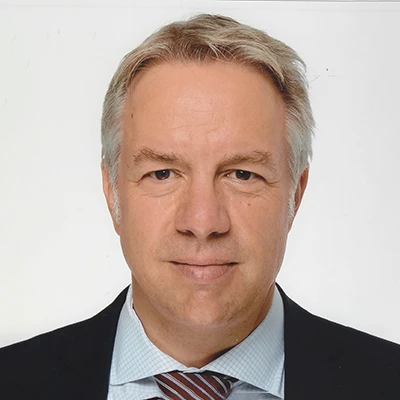
Monitoring and Diagnostics of Soldiers’ Condition
Andrej Pangeršič
CEO, Analitica d.o.o.
Andrej Pangeršič is Co-founder and Managing Director of Analitica, a Slovenian company applying machine learning, simulation models and digital twins to industry, energy and the environment since 2001. A physicist with 25+ years of leading complex IT and data projects, he directs R&D on AI-based detection and sensing (computer vision, hyperspectral imaging, signal analysis), predictive condition monitoring and secure on-premise AI – now applied to monitoring and diagnostics of future soldiers.
Detection, Sensing and Digital Twins from the Perspective of NATO and EDA
NATO representatives and the European Defence Agency - EDA
12:00
END
PANEL: Wednesday, 11 November 2026 / 14:00 – 15:30
PANEL: Redefining Energy Resilience as a Key Defence Capability
The panel examines energy resilience as a key component of defence capabilities, from reliable energy supply for military systems to cooperation between industry and government institutions.
14:00
START
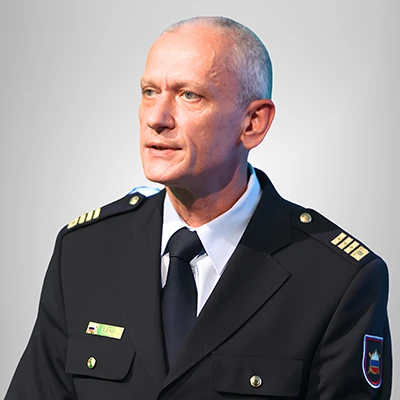
Lead Moderator
Colonel Robert Šipec
Energy Efficiency and Green Transition Division Head, Ministry of Defence of the Republic of Slovenia
He joined the Slovenian Armed Forces in 1992. Throughout his career, he has led divisions at the Force Command, the General Staff, and the Directorate of Logistics. His international military experience includes participation in the NATO operations KFOR and ISAF. He leads and directs several international and national projects in the field of energy efficiency of the defence sector. He joined the Slovenian Armed Forces in 1992. Throughout his career, he has led divisions at the Force Command, the General Staff, and the Directorate of Logistics. His international military experience includes participation in the NATO operations KFOR and ISAF. He leads and directs several international and national projects in the field of energy efficiency of the defence sector.
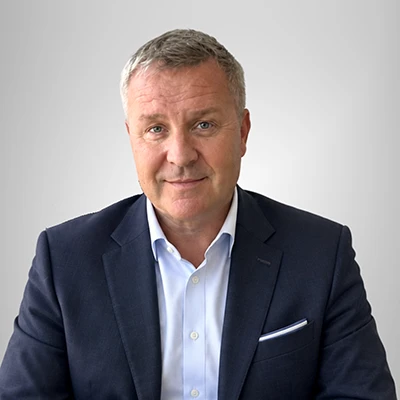
Co-Moderator
Matej Gajzer
Managing Director of TECES and President of the Slovenian Energy and Environment Partnership in Defence (SiEnE)
With more than 25 years of experience, he drives innovation by fostering collaboration between industry, research institutions and government. Through leading and coordinating numerous national and international defence projects, including EDF (European Defence Fund) and EDA (European Defence Agency) Cat.B projects, he contributes to the development of advanced energy technologies and integrated solutions to strengthen energy resilience as a key enabler of future defence capabilities.
Through his active involvement in EDA initiatives such as CF SEDSS, IF CEED and CapTech Energy and Environment, where he serves as an Industry Rapporteur, he promotes European cooperation and the integration of research, innovation and industrial capabilities to enhance energy resilience in the defence sector.
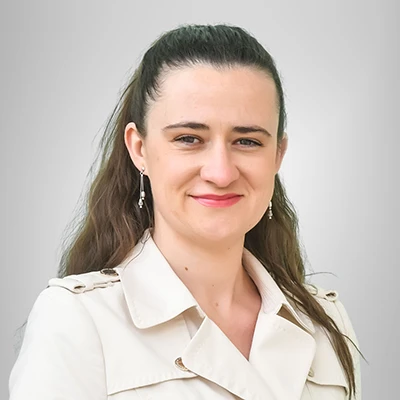
National & Allied Defence Perspective
Ajda Vodlan
Head of Military Technology, Research and Development Section (Ministry of Defence of the Republic of Slovenia)
Ajda Vodlan holds a master’s degree in Defence Studies and heads the Department of Military Technology, Research and Development at the Ministry of Defence of the Republic of Slovenia. Internationally, she represents Slovenia as Director for Research and Technology (R&T) at the European Defence Agency (EDA), Head of Delegation to the European Commission for the European Defence Fund (EDF), and a member of the NATO DIANA Board of Directors.
She also serves as Slovenia’s representative for AGILE (Programme for Agile and Rapid Defence Innovation).
European Defence & Capability Perspective
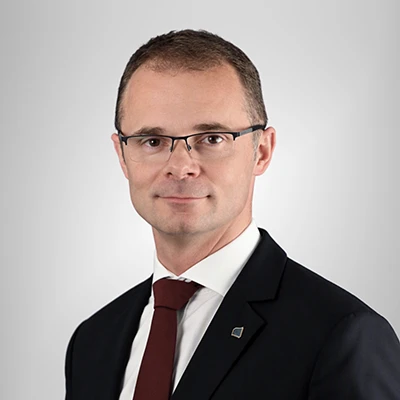
Michał Wierciński
Deputy Director RTI & Head of Unit, EU-funded Defence Research, European Defence Agency – EDA
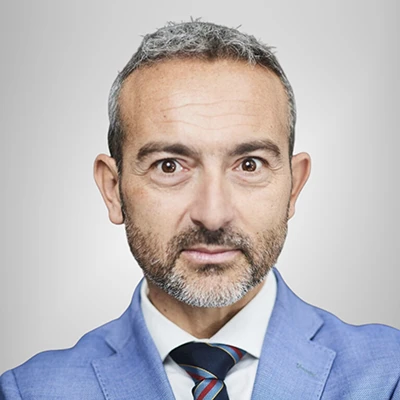
Giuseppe Dello Stritto
Head of the Land and Logistics Unit, European Defence Agency – EDA
Michał Wierciński
Michał Wierciński has spent the last 20 years working in the Polish defence and space sector. His experience spans government, industry and research organisations. He has worked on defence research and technology programmes and the development of advanced technologies in areas such as air defence, satellite reconnaissance, missile and rocket systems, and space technologies. He holds a PhD in security studies.
Since February 2025, he has served at the European Defence Agency as Deputy Director for Research, Technology and Innovation and Head of the EU-funded Defence Research Unit. His responsibilities cover defence R&T priorities and cooperation with the European Commission on EU-funded defence research. He also oversees a broad portfolio of R&T activities, including energy technologies and their relevance for defence capabilities and operational resilience.
Giuseppe Dello Stritto
Giuseppe Dello Stritto has been Head of Unit Land and Logistics at the European Defence Agency since September 2024. He joined EDA in 2021 and has played a significant role focused on the innovation impact on future warfare in delivering the 2023 EU Capability Development Priorities.
With a distinguished military career spanning over 25 years of active service in the Italian Army, Giuseppe is a Reserve Colonel. He served in various roles within the Army and MoD, including commanding and staff positions in artillery and armoured units, as well as roles in the National Armaments Directorate.
He was deployed in homeland and multinational operations and exercises, including NATO and UN missions in Afghanistan and Lebanon. He worked also on several multinational cooperation programs, to develop joint military capabilities for Italian Armed Forces. His education is grounded on “Nunziatella” Military School, and it includes a bachelor’s degree in strategic science, and master’s degrees in policy and management, and Procurement Management.
Energy & Critical Infrastructure Perspective
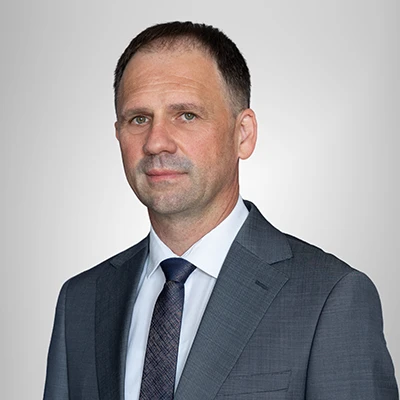
dr. Tomaž Žagar
State Secretary for Energy, Ministry of Infrastructure and Energy of the Republic of Slovenia
Dr Tomaž Žagar began his professional career in the energy sector more than 25 years ago. After earning a degree in Physics from the University of Ljubljana, he completed a PhD in Nuclear Engineering at the University of Maribor, supported by his research work at the Jožef Stefan Institute. Following his doctorate, he pursued further specialisation at international organisations and research institutes in Germany, the United States, and Slovenia. As a postdoctoral researcher, he focused on the physics of transuranic elements, nuclear energy, and the sustainable use of nuclear power, including radioactive waste management.
International Industry Perspective
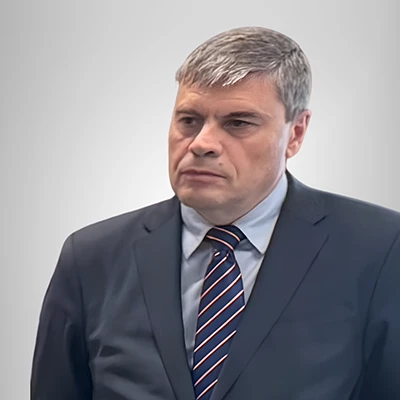
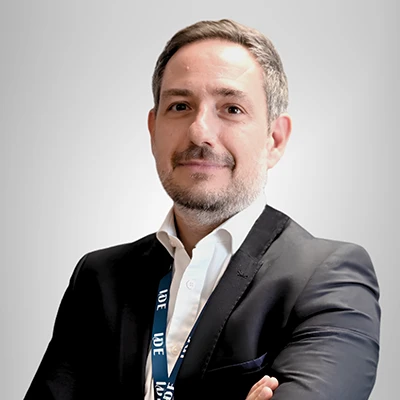
Juan José Forteza Esteban
Head of Research and Development, THALES España Sistemas
Theodoros Dionysopoulos
Director/ Hybrid Energy Systems, INTRACOM DEFENSE, Greece
Juan José Forteza Esteban
Juan José Forteza Esteban is an experienced technology and engineering executive with extensive expertise in research and development, project and programme management, bid management, and technological innovation. He has built a career spanning the defence, telecommunications, and technology sectors, combining strategic leadership with hands-on experience in complex international projects.
At Thales España Sistemas, he has held leadership responsibilities in bids, project management office (PMO) activities, and customer services, coordinating multidisciplinary teams and aligning project delivery with business objectives and customer requirements. Previously, at Amper Programas, he served as Head of PMO and Program Manager, overseeing project managers and coordinating complex programmes, including the FIS-HE contract for the Swiss Army Land Forces, which involved the development of command-and-control and training tools.
Alongside his industry career, he has maintained an active role in executive education as a professor at EOI (Escuela de Organización Industrial), teaching innovation and technology management within the TICAL programmes, and at AEDE Business School, where he has contributed to education in operations management and technology.
His professional background combines technological expertise, international project coordination, operational management, and business strategy. This multidisciplinary experience enables him to bridge engineering, programme execution, and organisational objectives, contributing to the delivery of innovative solutions in complex technological environments.
Theodoros Dionysopoulos
Theodoros Dionysopoulos is Business Unit Director for Hybrid Power and Energy Storage Systems at INTRACOM DEFENSE, where he leads the development and commercialisation of advanced energy solutions for defence applications. His portfolio includes advanced battery modules, high-voltage energy storage systems, hybrid generators, vehicle hybrid power systems, microgrids, and power management and control technologies designed to enhance operational effectiveness and energy resilience in the electrified battlespace.
Since joining INTRACOM DEFENSE in 2014, he has held several leadership positions spanning manufacturing operations, marketing, product and solutions sales, and business unit management. This broad experience combines technical expertise with strategic business development and the delivery of integrated solutions for demanding operational environments.
Theodoros is a Chartered Engineer and a STEM Ambassador, supporting the promotion of science and engineering among young people. His current work focuses on advancing hybrid power and energy storage concepts and technologies that support energy resilience, operational autonomy, survivability, and the evolving energy requirements of defence capabilities.
15:30
END
PANEL: Thursday, 12 November 2026 / 10:00 – 11:30
PANEL: Space and Defence - Dual-Use Applications and Federated Capability Development under the ESA Framework: Multiplying Capabilities and Enhancing Resilience
The key theme will be the role of space capabilities in strengthening defense and security resilience, as well as the opportunities offered by the dual use (civil and defense) of space technologies. The focus will be on the federated development of capabilities within ESA, which enables countries to jointly invest in space infrastructure, thereby multiplying national capabilities.
10:00
START
Moderator
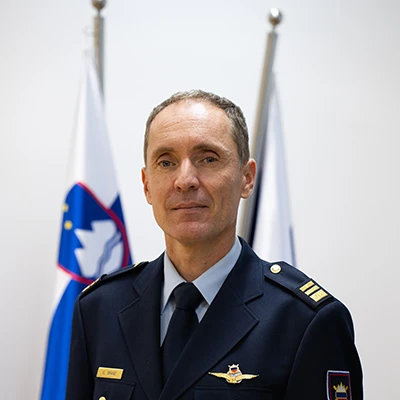
Colonel Gregor Virant
Slovenian Armed Forces
Colonel Gregor Virant serves as Head of the Strategic Plans and Policy Sector (SPP J-5) at the General Staff of the Slovenian Armed Forces, where he is responsible for drafting core strategic documents and shaping future military capabilities.
He entered the military as an aeronautical engineer and pilot, previously holding key leadership roles including Commander of the Fixed Wing Squadron and Deputy Commander of the Aviation and Air Defence Brigade. In addition to managing the overall strategic portfolio, his tasking includes bringing the space domain into national defense planning and operational use.

Alpstar Project: Earth Observation for European Resilience
Marline Claessens
project manager Alpstar, ESA
Slovenian Industrial Solutions for Earth Observation from Space
Tanja Permozer
Slovenian Space Office
Experience of the Slovenian industry in the development of dual-use space technologies (satellite systems, ...).
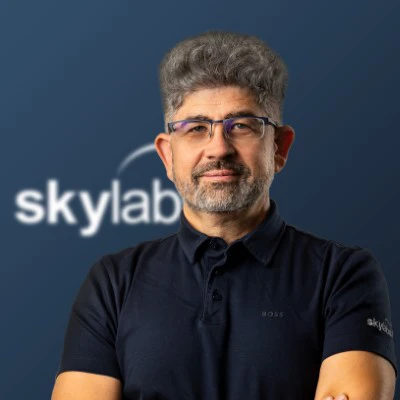
Tomaž Rotovnik
CEO, SkyLabs d.o.o.

Integration of space capabilities into defence planning and national resilience.
Lieutenant Colonel Urška Brodnik
Directorate for Defence Affairs, Ministry of Defence
Lieutenant Colonel Urška Brodnik is the Head of the Centre for Geospatial Support and Space Capabilities within the Modern Security Challenges Sector of the Defence Policy Directorate at the Ministry of Defence of the Republic of Slovenia. The Centre serves as the lead entity for space-related matters within the Ministry of Defence, coordinating the provision of space services and the development of space capabilities to support two pillars of national security—the defence system and the system for protection against natural and other disasters—with the Slovenian Armed Forces and the protection, rescue, and relief forces as the primary users.
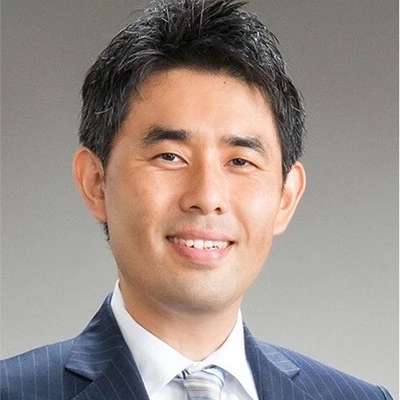
TBD
Takashi Mogi
Special Adviser to the Minister, Ministry of Economy, Trade and Industry (METI), Government of Japan
Director of Industrial Research, JETRO (Japan External Trade Organisation)
METI/JETRO
11:30
END
*The organiser reserves the right to change the programme. The entire conference programme will be conducted in English without interpretation.
10:00 - 10:05


Here goes your text ... Select any part of your text to access the formatting toolbar.
Here goes your text ... Select any part of your text to access the formatting toolbar.
Here goes your text ... Select any part of your text to access the formatting toolbar.
Thursday, 12 November 2026 / 15:00
Solemn Closing of the Official part of SIDEC 2026
The following speakers will address the attendees:
Boštjan Skalar
Director of GOIS, Slovenian Defence Industry Cluster
Uroš Korošec
Acting Director-General of the Logistics Directorate, Ministry of Defence of the Republic of Slovenia
The closing ceremony of the 2nd SIDEC will take place at the Open Forum in Hall L1.